https://www.datahubconsulting.co.uk/articles/10-years-of-data-protection/
DataHub Consulting, Experts in Analytics, Business Intelligence, and Compliance 1200627
10 Years of Data Protection
DataHub Consulting, Experts in Analytics, Business Intelligence, and Compliance310310
How Data Protection, Cybersecurity, AI Governance, and Global Compliance Has Evolved Since 2016
In May 2016, the European Union formally enacted the General Data Protection Regulation, more commonly known as GDPR. At the time, many organisations viewed it as another regulatory exercise that would increase paperwork and operational cost. Very few organisations predicted how profoundly it would reshape global business practices, technology governance, cybersecurity, digital marketing, and public expectations around privacy. In the article we are going to review the last 10 years of data protection, it’s impacts, and what to expect in the future.
Ten years later, the impact of GDPR is impossible to ignore. Data protection is now a board level issue. Cybersecurity incidents can become regulatory investigations within hours. Artificial intelligence systems are creating entirely new governance challenges. Customers, employees, suppliers, and regulators expect organisations to handle personal information responsibly and transparently.
The past decade also demonstrated that privacy regulation is no longer limited to Europe. Countries across the Middle East, Africa, Asia, and the Americas have introduced their own privacy frameworks, many influenced directly or indirectly by GDPR principles. Organisations operating internationally now face increasingly complex regulatory environments where privacy, cybersecurity, AI governance, and digital trust intersect.
This article explores how the global data protection landscape evolved during the past decade, the lessons organisations should learn from major enforcement cases, and what businesses must do to strengthen compliance, resilience, and governance in 2026 and beyond.
The World Before GDPR
Before GDPR, data protection laws across Europe were fragmented and inconsistent. The previous framework, based on the 1995 Data Protection Directive, was designed during an era before smartphones, cloud computing, streaming platforms, social media, and large scale digital advertising.
Many organisations treated data protection as an administrative issue rather than a strategic business risk. Privacy notices were often vague. Consent mechanisms lacked transparency. Large volumes of personal information were collected without meaningful oversight. Cross border data transfers were poorly understood, and many organisations lacked clear visibility over where personal data was stored or processed.
Technology evolved much faster than regulation. Social media platforms expanded globally. Online advertising ecosystems became increasingly sophisticated. Businesses started monetising customer behaviour at unprecedented scale. At the same time, public awareness of how personal information was collected and shared remained limited.
The imbalance between technological capability and regulatory oversight created growing concern among lawmakers and regulators. GDPR was designed to address that imbalance by introducing stronger accountability, greater transparency, and meaningful enforcement powers.
Why GDPR Became Necessary
The years leading up to GDPR exposed the risks associated with weak privacy governance. Major data breaches, large scale profiling, and opaque data sharing practices highlighted how much control organisations held over personal information.
The Cambridge Analytica scandal became one of the defining moments of the digital era. Millions of individuals discovered that their data had been harvested and used for political profiling without meaningful consent. The incident fundamentally changed public understanding of how personal information could influence behaviour, public opinion, and democratic processes.
GDPR introduced several transformative principles:
Organisations needed a lawful basis for processing personal data.
Individuals gained stronger rights over their information.
Serious breaches had to be reported rapidly.
Regulators received significantly stronger enforcement powers.
Accountability became a legal requirement rather than an optional best practice.
The regulation also changed organisational culture. Privacy could no longer sit quietly within legal or compliance departments. Senior leadership teams now needed visibility over how personal data was collected, processed, stored, transferred, and secured.
The First Wave of GDPR Enforcement
When GDPR became enforceable in May 2018, organisations across Europe rushed to update privacy notices, cookie banners, supplier agreements, and consent mechanisms. Many businesses focused on documentation rather than operational maturity.
Regulators initially adopted a measured approach while organisations adjusted to the new framework. Over time, however, enforcement activity accelerated significantly. Major fines against airlines, hospitality providers, social media platforms, retailers, and technology companies demonstrated that regulators expected organisations to take data protection seriously.
Several themes emerged repeatedly during enforcement:
Weak cybersecurity controls
Poor access management
Inadequate transparency
Excessive data collection
Weak supplier oversight
Failures involving children’s data
Inadequate international transfer safeguards
These enforcement actions changed executive attitudes. GDPR was no longer viewed as a compliance inconvenience. It became a material business risk with financial, operational, legal, and reputational consequences.
How GDPR Changed Business Operations
GDPR transformed the way organisations manage information. Businesses were forced to develop clearer data governance frameworks and better visibility over internal processes. Many organisations discovered they lacked:
Accurate data inventories
Clear retention schedules
Defined ownership of information assets
Consistent security controls
Structured supplier governance
Mature incident response procedures
The regulation accelerated investment in governance, risk management, cybersecurity, and privacy operations. Organisations introduced Data Protection Impact Assessments, stronger supplier due diligence, encryption standards, access control improvements, and employee awareness programmes.
Importantly, GDPR also influenced procurement and commercial relationships. Enterprise customers increasingly expected suppliers to demonstrate strong privacy and cybersecurity standards before contracts were signed. Data protection became part of commercial trust.
Cybersecurity and Data Protection
One of the most important lessons from the past decade is that cybersecurity and data protection cannot operate independently.
Most serious privacy incidents now originate from cybersecurity failures such as phishing attacks, ransomware, credential compromise, insider threats, or cloud misconfiguration. A security incident can quickly become a regulatory issue requiring breach assessment, regulator notification, legal analysis, customer communication, and reputational management.
Attackers have also become more sophisticated. Artificial intelligence has dramatically improved phishing and social engineering attacks. Criminal groups increasingly target employees using realistic messages, cloned voices, and highly personalised communications.
Ransomware attacks have evolved beyond simple encryption. Many criminal groups now exfiltrate data before encrypting systems, creating additional regulatory pressure by threatening public disclosure of sensitive information.
The organisations that manage these incidents effectively usually demonstrate several characteristics:
Integrated cybersecurity and privacy governance
Well rehearsed incident response plans
Clear executive accountability
Strong technical controls
Regular employee awareness training
Effective supplier oversight
Continuous monitoring and testing
Organisations that continue treating privacy and cybersecurity as separate disciplines face increasing operational and regulatory risk.
The Growth of Global Privacy Laws
GDPR influenced privacy legislation across the world. Many countries introduced new frameworks inspired by GDPR principles such as transparency, accountability, lawful processing, and stronger individual rights.
Brazil introduced the LGPD. California expanded consumer privacy rights through the CCPA and CPRA. India introduced the Digital Personal Data Protection Act. Countries across the Middle East, Africa, and Asia accelerated the development of privacy frameworks designed to strengthen governance and support digital economies.
This global expansion created new challenges for multinational organisations. Businesses operating internationally must now navigate:
Multiple legal frameworks
Different regulatory expectations
Localisation requirements
Cross border transfer restrictions
Sector specific obligations
Rapidly evolving guidance
The complexity of global compliance continues to increase, particularly for organisations operating across heavily regulated sectors such as healthcare, finance, aviation, telecommunications, and critical infrastructure.
International Data Transfers
International data transfers remain one of the most challenging areas of modern privacy compliance.
Cloud computing, remote work, outsourced services, international support operations, and global supply chains mean that personal information frequently moves between jurisdictions. Many organisations still struggle to fully understand where their data is stored and who can access it.
Court decisions involving Safe Harbour and Privacy Shield fundamentally reshaped international transfer governance. Organisations transferring personal information internationally increasingly need:
Standard Contractual Clauses
Transfer Impact Assessments
Technical safeguards
Encryption controls
Supplier due diligence
Continuous monitoring
Transfer risk is not static. Organisations regularly introduce new suppliers, cloud services, collaboration tools, AI systems, and external platforms. Each change can alter the transfer risk profile and create new compliance obligations.
Strong transfer governance is therefore an ongoing operational requirement rather than a one-time legal exercise.
Transfer Impact Assessments
One of the most important developments in international data protection compliance has been the increased focus on Transfer Impact Assessments, commonly referred to as TIAs.
Following the Schrems II judgment, organisations transferring personal data outside the European Economic Area were required to assess whether the receiving country provided protections that were essentially equivalent to those available under European law.
For many organisations, this represented a major operational challenge. It was no longer sufficient to simply sign Standard Contractual Clauses and assume compliance. Businesses now needed to evaluate:
The legal framework of the destination country
Government surveillance powers
The ability of individuals to exercise legal rights
Technical and organisational safeguards
Encryption and access controls
The practical risks associated with the transfer
Transfer Impact Assessments require collaboration between legal teams, cybersecurity specialists, compliance functions, procurement teams, and operational stakeholders. They also require continuous review because transfer risk changes over time as organisations adopt new suppliers, cloud services, collaboration platforms, AI systems, and outsourced support operations.
Many organisations still underestimate the complexity of transfer governance. Regulators increasingly expect organisations to demonstrate that transfer decisions are evidence based, documented, and regularly reviewed.
For organisations operating internationally, TIAs are no longer optional administrative exercises. They are now a critical part of modern data governance and risk management.
The Strategic Overlay of IT Security and Data Protection
One of Datahub Consulting’s strongest differentiators is the ability to integrate cybersecurity, IT governance, and data protection into a unified operational framework.
Many organisations still treat cybersecurity and data protection as separate disciplines. IT security teams often focus on technical controls such as firewalls, endpoint protection, patch management, vulnerability scanning, and network monitoring. Meanwhile, data protection teams focus on lawful processing, privacy notices, DPIAs, records of processing activities, and regulatory compliance.
In practice, these areas are deeply interconnected.
A Data Protection Impact Assessment conducted without technical security input may fail to identify critical operational risks. Likewise, a cybersecurity programme that ignores regulatory obligations may struggle during a data breach investigation.
Modern organisations need integrated governance models where privacy, cybersecurity, compliance, and operational risk functions collaborate continuously rather than operating in silos.
At Datahub Consulting, we regularly help organisations:
Align cybersecurity and privacy governance
Integrate incident response processes
Improve technical and organisational controls
Map data flows across systems and suppliers
Conduct joint risk assessments
Strengthen governance reporting structures
Build resilience across operational, technical, and regulatory domains
This integrated approach helps organisations reduce duplication, improve operational visibility, strengthen regulatory readiness, and build more resilient digital environments.
As digital transformation accelerates, organisations that fail to integrate IT security and data protection will face increasing operational complexity and regulatory exposure.
The Growing Threat of Social Engineering
Social engineering has become one of the most significant cybersecurity and data protection threats facing organisations in 2026.
Unlike traditional cyber-attacks that rely primarily on technical vulnerabilities, social engineering attacks target human behaviour, trust, and decision making. Attackers manipulate employees into disclosing sensitive information, transferring funds, clicking malicious links, resetting credentials, or granting unauthorised access.
The sophistication of these attacks has increased dramatically during the past decade.
Artificial intelligence tools now allow attackers to create highly convincing phishing emails, fake executive communications, cloned voices, and personalised messages that closely resemble legitimate business interactions. Criminal groups increasingly research organisations through social media, company websites, public records, and leaked information before launching targeted attacks.
Common social engineering techniques include:
Phishing emails
Spear phishing campaigns
Business email compromise
Fake IT support requests
Voice phishing and cloned voice attacks
SMS phishing
Fraudulent supplier requests
Social media impersonation
These attacks frequently result in data protection breaches because attackers often gain access to systems containing employee records, customer information, financial data, health records, or commercially sensitive information.
The consequences can be severe:
Regulatory investigations
Mandatory breach notifications
Financial losses
Operational disruption
Reputational damage
Customer distrust
Litigation exposure
Social engineering demonstrates why cybersecurity and data protection cannot be separated. A successful phishing attack is not just an IT issue. It quickly becomes a governance, regulatory, legal, operational, and reputational issue.
The organisations that manage social engineering risk effectively usually combine:
Strong cybersecurity controls
Multi factor authentication
Employee awareness training
Executive engagement
Incident response preparedness
Supplier verification processes
Clear escalation procedures
Continuous monitoring and testing
Employee awareness remains one of the most effective defences. Staff should be encouraged to question unusual requests, verify communications independently, and report suspicious activity quickly.
Simple guidance such as “If something does not look right, stop, think, and check” remains highly effective when reinforced consistently across the organisation.
As AI driven attacks continue to evolve, social engineering risk will likely become one of the defining cybersecurity and data protection challenges of the next decade.
AI Governance and the EU AI Act
Artificial intelligence represents the next major frontier in digital regulation. Organisations increasingly rely on AI systems to support recruitment, fraud detection, customer analytics, behavioural profiling, healthcare decisions, content generation, and operational automation.
The EU AI Act introduced a risk based framework designed to govern the development and deployment of AI technologies. High risk systems face stricter obligations involving transparency, documentation, human oversight, testing, and governance.
The relationship between AI governance and GDPR is increasingly important. Many AI systems rely heavily on personal data. Organisations therefore need to consider:
Lawful basis for processing
Bias and fairness
Transparency
Automated decision making
Data minimisation
Retention
Human oversight
Security and resilience
Many organisations are currently deploying AI tools faster than governance frameworks can mature. This creates significant legal, operational, ethical, and reputational risk.
The next decade will likely see organisations integrating privacy, cybersecurity, ethics, governance, and AI oversight into unified digital risk frameworks.
Children’s Data and Online Platforms
Children’s privacy became a growing regulatory focus during the past decade. Regulators increasingly recognised that young users often lack full understanding of how digital platforms collect and use their information.
Major enforcement cases involving social media and online platforms demonstrated concerns around:
Behavioural advertising
Profiling
Geolocation tracking
Weak age verification
Excessive data collection
Manipulative design practices
Frameworks such as the UK’s Children’s Code established stronger expectations around age appropriate design and default privacy protections.
Any organisation whose services may be accessed by children should carefully assess whether existing privacy controls, user journeys, and consent mechanisms meet regulatory expectations.
The Human Side of Data Protection
Technology alone cannot solve privacy and cybersecurity challenges. Human behaviour remains one of the largest sources of organisational risk.
Employees regularly face phishing attacks, fraudulent invoices, credential theft attempts, and social engineering campaigns. Attackers increasingly exploit trust, urgency, and human psychology rather than relying purely on technical vulnerabilities.
Effective organisations invest heavily in awareness, culture, and governance. Employees need to understand:
How to recognise suspicious activity
Why data protection matters
How to report incidents
How to handle sensitive information securely
Their responsibilities under organisational policies
Privacy culture matters. Organisations with mature governance frameworks usually demonstrate stronger collaboration between IT, legal, compliance, HR, procurement, operations, and executive leadership.
What Regulators Are Focusing On in 2026
Regulators continue to increase scrutiny across several major risk areas.
Artificial intelligence and automated decision making are attracting growing attention, particularly where systems influence employment, healthcare, education, or financial outcomes.
Biometric technologies such as facial recognition and voice analysis are also under significant scrutiny due to concerns around surveillance, consent, and proportionality.
Cybersecurity resilience remains another major enforcement priority. Regulators increasingly expect organisations to demonstrate proactive governance rather than reactive compliance.
Third party risk is also growing. Organisations remain accountable for how suppliers, processors, and outsourced providers handle personal information. Weak vendor governance continues to contribute to major incidents globally.
Importantly, enforcement activity is no longer focused exclusively on large technology companies. Organisations of all sizes now face regulatory expectations around accountability, governance, transparency, and security.
Seven Priorities for Organisations
As privacy regulation, cybersecurity risk, and AI governance continue to evolve, organisations should focus on several key priorities during 2026 and beyond
Strengthen governance structures and executive accountability.
Improve visibility over personal data and data flows.
Align cybersecurity and privacy operations.
Review supplier and cloud governance frameworks.
Assess the use of artificial intelligence tools.
Improve employee awareness and incident preparedness.
Conduct independent audits and maturity assessments regularly
Organisations that address these priorities proactively will be better positioned to manage regulatory change, operational risk, and customer expectations.
Why Data Protection Creates Commercial Value
Strong data protection is no longer simply a legal requirement. It is increasingly a competitive differentiator.
Customers, investors, regulators, and enterprise clients expect organisations to demonstrate mature governance and responsible data practices. Businesses with strong privacy and cybersecurity programmes are often better positioned to:
Win enterprise contracts
Support digital transformation
Build customer trust
Reduce operational disruption
Improve resilience
Enable secure innovation
The organisations that treat data protection strategically rather than reactively are often more resilient, more trusted, and better prepared for long term digital growth
Conclusion
Ten years after GDPR reshaped the global privacy landscape, data protection has evolved into something far broader than compliance alone.
Privacy, cybersecurity, artificial intelligence, digital trust, governance, and operational resilience are now deeply interconnected. Organisations face increasing expectations from regulators, customers, employees, suppliers, and investors regarding how personal information is managed and protected.
The next decade will bring even greater complexity as AI adoption accelerates, cybersecurity threats evolve, and international regulation expands further.
The organisations that succeed will be those that treat data protection as a strategic capability supported by strong governance, executive accountability, mature cybersecurity controls, responsible innovation, and continuous improvement.
For organisations looking to strengthen compliance, reduce operational risk, and prepare for the future of digital regulation, now is the right time to review existing frameworks and invest in long term resilience.
How Datahub Consulting Support Organisations
Datahub Consulting supports organisations across Europe, UK, Middle East, Africa, Asia, and the Americas with data protection, cybersecurity, AI governance, and regulatory compliance services.
Our specialists help organisations strengthen governance, reduce operational risk, improve resilience, and prepare for evolving regulatory frameworks.
Why Datahub Consulting Are Different?
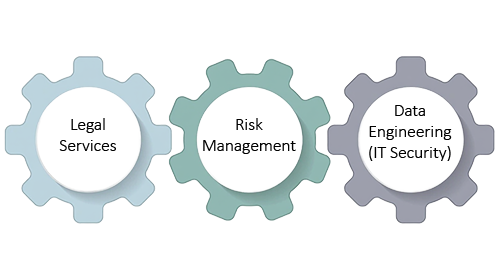
Datahub sees the core relationship of a successful compliance framework as the alignment of three critical disciplines
Legal services are essential to understand and interpret the laws, regulations, and legislative requirements governing each jurisdiction and region.
Risk Management sits at the centre of data protection because organisations must continuously identify, assess, manage, and mitigate risks relating to the personal data they process.
Finally, integrating IT Security into the compliance framework is essential because technical and organisational safeguards form the operational security controls required by modern data protection laws and regulatory frameworks.
Datahub has experts across all three core elements. If one of these critical components becomes disconnected, the compliance framework will weaken, creating governance gaps, operational risk, increased regulatory exposure, and greater vulnerability to cybersecurity incidents and data protection breaches.
A truly effective compliance framework cannot operate in silos. Legal interpretation, risk management, and IT security must work together continuously to create a resilient, practical, and commercially effective approach to modern data protection and cybersecurity governance
Our services include:
Global Data Protection Implementation and Support
Data Protection Officer as a Service
AI governance readiness
Cybersecurity and risk assessments
International transfer reviews
Data protection audits
Policy and framework development
Employee awareness training
Incident response preparedness
Governance and maturity assessments
We support organisations ranging from SMEs to multinational enterprises across multiple industries including finance, aviation, retail, healthcare, technology, and critical infrastructure
Get in Touch
The first step does not need to be complicated.
It would not cost you anything to start a conversation with our CEO, a highly experienced data compliance practitioner and subject matter expert in global data protection laws, cybersecurity governance, and international regulatory compliance.
Contact Our Team
No pressure. No obligation. Just a professional conversation focused on helping your organisation understand where it stands and what should come next.
Contact Datahub Consulting today to begin the conversation and take the next step towards stronger data protection, cybersecurity resilience, and global compliance readiness.

 310
310
310
310