https://www.datahubconsulting.co.uk/articles/microsoft-fabric-coding-languages-explained/
DataHub Consulting, Experts in Analytics, Business Intelligence, and Compliance 1200627
Microsoft Fabric Coding Languages Explained.
DataHub Consulting, Experts in Analytics, Business Intelligence, and Compliance310310
Microsoft Fabric Coding Languages Explained: Understanding when to use SQL, PySpark, Power Query (M) and KQL is essential for organisations looking to maximise the value of their Microsoft Fabric investment. Microsoft Fabric is rapidly becoming the platform of choice for organisations modernising their data and analytics capabilities. By bringing together Data Engineering, Data Warehousing, Business Intelligence, Real-Time Intelligence and AI within a single SaaS platform, Microsoft Fabric simplifies the delivery of enterprise analytics. However, choosing the right language for the right workload remains one of the most important architectural decisions organisations can make.
One of the most common questions asked by CIOs, CTOs and Heads of Data is, “Which language should be used for each workload?” Understanding SQL, PySpark, Power Query (M) and KQL is critical to building a scalable, governed and cost-effective Microsoft Fabric architecture.
What Data Leaders Need to Know Before Building a Modern Analytics Platform
When Datahub Consulting works with organisations planning or implementing Microsoft Fabric, we frequently hear similar questions from CIOs, CTOs, Heads of Data, IT Directors and Data Managers.
“Why does multiple languages exist within Microsoft Fabric?”
“What language should we use?”
“Do the team need to learn PySpark?”
“What is KQL?”
“What’s the business impacts of choosing the wrong approach?”
Whilst answering these questions we then get into the conversations of cost, scalability, and governance. So, we then address other questions such as:
“If my team use PySpark, will my costs increase?”
“Can Power Query handle enterprise-scale workloads?”
“Using Fabric how can we manage governance and AI readiness?”
In this article I want to start addressing questions like these. So, let’s get started…
The challenge for many organisations is that the wrong technology decisions are often made early in a project. These decisions may not create immediate problems, but as data volumes increase and reporting requirements become more sophisticated, organisations frequently experience rising costs, slower performance, governance challenges and increased delivery times.
Understanding when to use SQL, PySpark, M Query and KQL is therefore not simply a technical consideration. It is a strategic decision that directly influences the success, scalability and long-term value of a Microsoft Fabric investment.
Why Microsoft Fabric Uses Multiple Languages
One of the first questions many organisations ask when they begin evaluating Microsoft Fabric is why the platform supports several different query and programming languages. At first glance, this can appear unnecessarily complicated. If Microsoft Fabric has been designed as a unified analytics platform, why isn’t there simply one language that performs every task?
The answer lies in understanding the wide variety of data challenges that modern organisations face. Today’s businesses rarely rely on a single type of data or a single style of analytics. A finance department may require highly structured reports that summarise revenue and expenditure, while an operations team may need to process millions of sensor readings arriving every hour from manufacturing equipment or connected devices. Marketing teams often combine customer information from multiple cloud applications, and cybersecurity teams continuously monitor real-time security events looking for suspicious activity.
Although all of these scenarios involve data, they have very different processing requirements. A language that performs exceptionally well when producing financial reports may not be the best choice for analysing billions of streaming events. Likewise, a tool that makes it easy for business analysts to prepare spreadsheet data may struggle when processing large-scale data engineering workloads.
Rather than attempting to force every workload through a single technology, Microsoft Fabric brings together several specialist languages, each designed to excel at a particular stage of the data lifecycle. This allows organisations to build solutions that are both easier to maintain and capable of scaling as business requirements evolve.
SQL – The Foundation of Business Reporting
SQL remains the most widely used language in enterprise data platforms, and for good reason. For decades it has been the standard for querying structured data stored within relational databases and data warehouses. Most organisations already have employees who understand SQL, making it an excellent choice for creating reports, dashboards and business metrics that support everyday decision-making.
Within Microsoft Fabric, SQL continues to play a central role. It is commonly used to build data warehouse solutions, create reporting views, secure access to sensitive information and prepare trusted datasets for Power BI. Because SQL is designed around structured business data, it is particularly well suited to scenarios such as financial reporting, sales analysis, inventory management and customer analytics.
From a business perspective, SQL provides consistency and stability. It is straightforward to govern, relatively easy to support and enables organisations to create a single version of the truth that can be shared across multiple reports and departments. For the majority of traditional reporting requirements, SQL is often the most efficient and cost-effective solution.
Within Microsoft Fabric Data Engineering, SQL plays a significant role across multiple workloads. Whilst many people associate Data Engineering with PySpark, SQL remains a critical language throughout Microsoft Fabric:
Fabric Data Warehouse uses SQL as the primary language for creating tables, loading data using CTAS statements, developing views, functions and stored procedures, and implementing governed reporting solutions.
Fabric Lakehouse enables SQL queries against Delta tables stored in OneLake through the SQL Analytics Endpoint, making it easier for analysts and reporting teams to access data without requiring Spark expertise.
Fabric Notebooks support native SQL execution, allowing developers to perform data validation, transformation, aggregations and exploratory analysis alongside PySpark workloads. Within a notebook you can select the language to use for the whole notebook, or for each individual cell in the notebook.
Materialised Lake Views leverage SQL code to create high-performance analytical views that simplify access to Lakehouse data, improve query performance and provide a trusted reporting layer for downstream analytics and Power BI solutions. At the time of writing this article SQL is the only language to create MLVs, this may change in future updates.
PySpark – Built for Enterprise-Scale Data Engineering
As organisations collect increasing volumes of information, traditional approaches to data processing can become less effective. Modern businesses often need to analyse hundreds of millions or even billions of records generated from online transactions, connected devices, manufacturing systems or customer interactions. These workloads require a different approach.
PySpark is designed specifically for processing very large datasets efficiently by distributing work across multiple computing resources. Rather than relying on a single server to complete every calculation, PySpark enables Microsoft Fabric to divide processing into smaller tasks that can be performed simultaneously. This allows organisations to transform and prepare data at a scale that would be difficult or impractical using traditional techniques alone.
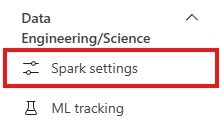
Microsoft Fabric creates a default Environment with preset compute nodes. If you need more compute power for a particular notebook then a new Environment can be set up and the notebook can be run against this Environment. Environments can be managed in the workspace settings under the Data Engineering / Science dropdown.
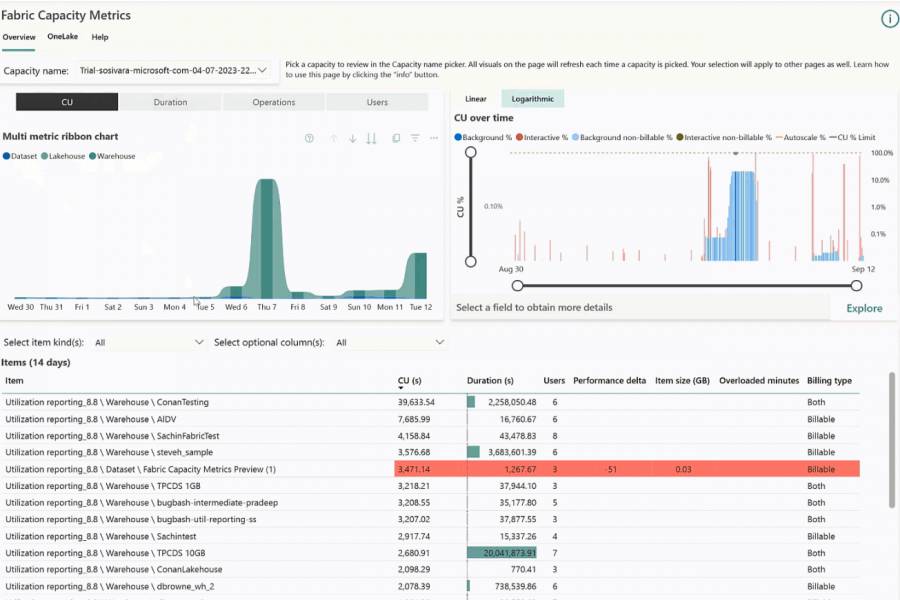
Please note that increasing the performance of the PySpark engine will increase the Capacity Units (CUs) used. Each capacity has its own number of CUs and burning through these units unnecessarily will cause the capacity to throttle if not managed. The Microsoft Capacity Metrics App is where the CUs are monitored and managed. For more information on the Capacity Metrics App read the Microsoft learn resource: https://learn.microsoft.com/en-us/fabric/enterprise/metrics-app
Image from Microsoft Learn – https://learn.microsoft.com/en-us/fabric/data-warehouse/usage-reporting
For business leaders, the significance of PySpark is not the programming language itself but the capability it provides. Organisations investing in artificial intelligence, predictive analytics or enterprise data platforms need technology that can continue to perform as data volumes grow. By using PySpark where appropriate, businesses can prepare themselves for future expansion without continually redesigning their data platform.
M Query – Simplifying Data Preparation
Before organisations can analyse their data, it first needs to be collected, cleansed and prepared. This is where M Query Language, often referred to simply as Power Query, provides significant value.
Many business users are already familiar with Power Query through Microsoft Excel and Power BI. Within Microsoft Fabric, the same technology enables data to be imported from a wide variety of sources, including databases, spreadsheets, cloud applications, APIs and flat files. Common preparation tasks such as removing unnecessary columns, correcting data types, filtering records and combining datasets can often be completed with minimal coding.
For many organisations, this dramatically reduces the time required to bring new data sources into the analytics platform. Business analysts can prepare information more quickly, while IT teams benefit from standardised and reusable data ingestion processes.
However, M Query is most effective when used for the purpose it was designed for: data preparation. As organisations begin processing increasingly large datasets or implementing complex transformation logic, other technologies within Microsoft Fabric may provide greater scalability and long-term efficiency. Understanding where M Query delivers the greatest value helps organisations balance rapid development with sustainable platform design.
KQL – Enabling Real-Time Operational Intelligence
Not all business decisions are based on historical reporting. Increasingly, organisations need to respond to events as they happen. Manufacturers monitor production equipment, logistics companies track vehicle movements, retailers analyse customer activity on their websites, and cybersecurity teams investigate suspicious events within seconds of detection.
These scenarios require technology that is optimised for rapidly ingesting and analysing continuous streams of data. Kusto Query Language (KQL) was designed specifically for this purpose.
Within Microsoft Fabric, KQL enables organisations to analyse large volumes of event and telemetry data in near real time. Instead of waiting for overnight data refreshes, operational teams can monitor live information, identify trends as they emerge and investigate issues before they begin affecting customers or business operations.
For decision-makers, the value of KQL lies in improved operational awareness. Faster access to live information supports quicker decisions, reduces response times and enables organisations to move from reactive reporting towards proactive management.
Choosing the Right Tool for the Right Business Outcome
One of the greatest strengths of Microsoft Fabric is that organisations are not forced to compromise by selecting a single language for every workload. Instead, each language has been included because it addresses a specific business need.
SQL provides the trusted foundation for business reporting and governed analytics. PySpark enables organisations to process large-scale datasets and prepare for advanced AI initiatives. M Query accelerates data ingestion and preparation, allowing new data sources to be integrated quickly and consistently. KQL delivers the real-time operational intelligence needed to monitor modern digital businesses.
The most successful Microsoft Fabric implementations recognise that these languages are complementary rather than competing technologies. Instead of asking which language is “best”, organisations should focus on selecting the language that best aligns with the business objective they are trying to achieve. Making these decisions early helps create a data platform that is easier to manage, more scalable, and capable of supporting future growth without unnecessary complexity or cost.
The Hidden Cost of Choosing the Wrong Language
One of the most overlooked aspects of Microsoft Fabric adoption is that performance and scalability issues are often not caused by the platform itself, but by early design decisions made around how data is processed. In particular, organisations that standardise too heavily on a single language frequently introduce inefficiencies that only become visible once data volumes increase or reporting requirements become more complex.
At the beginning of a project, these decisions rarely appear problematic. A solution built entirely in one language can often be delivered quickly, and early dashboards may perform adequately. However, as organisations scale their use of Microsoft Fabric, subtle design limitations begin to surface. Refresh times increase, development cycles slow down, and teams begin to introduce workarounds that gradually increase technical debt. Over time, these inefficiencies translate directly into higher operational costs, reduced agility and slower delivery of business insight.
Understanding these trade-offs is critical for decision-makers because the cost of getting the architecture wrong is rarely immediate, it accumulates gradually as the platform becomes embedded across the organisation.
Scenario 1 – Everything Built in Power Query
In many organisations, Power Query (M Query) is the first tool that users encounter when working with Microsoft Fabric or Power BI. It is intuitive, highly accessible and extremely effective for integrating data from a wide range of sources. For this reason, it is not uncommon to see early-stage analytics platforms built almost entirely using Power Query transformations.
In the short term, this approach can appear highly productive. Business users are able to build reports quickly, and data connections can be established without the need for extensive engineering support. However, as the volume and complexity of data grows, limitations begin to emerge.
When large-scale transformations are handled exclusively through Power Query, organisations often experience increasingly slow refresh cycles. Processes that initially took minutes may begin to take hours as data volumes increase. Because Power Query is primarily designed for data preparation rather than enterprise-scale transformation, teams may also find that complex logic becomes difficult to maintain and replicate across multiple reports.
Over time, this can lead to a growing maintenance burden. Individual reports begin to diverge in logic, data refresh failures become more common, and engineering teams are required to intervene more frequently to stabilise performance. What initially appeared to be a rapid development approach can gradually evolve into a fragmented and difficult-to-manage analytics environment.
Scenario 2 – Everything Built in PySpark
At the other end of the spectrum, some organisations adopt a highly engineering-driven approach where almost all data processing is implemented using PySpark. This often occurs in teams with strong data engineering capabilities or in environments where large-scale data processing is a primary concern.
PySpark is extremely powerful and well suited to handling large volumes of data. However, when it is used for every workload, regardless of complexity or scale, it can introduce unnecessary overhead.
In practice, this often results in solutions that are more complex than required. Simple transformations that could be implemented quickly in SQL or Power Query may instead be developed as Spark jobs, requiring additional development effort, testing and operational monitoring. While technically robust, these solutions can be harder for wider teams to understand and support.
This approach also has implications for skills availability. PySpark development requires specialised expertise, and organisations that rely heavily on it may find themselves dependent on a smaller pool of engineers. This can increase delivery timelines, raise support costs and create bottlenecks when changes are required.
In addition, not all workloads benefit from distributed processing. For smaller or highly structured datasets, using Spark can introduce unnecessary complexity without delivering meaningful performance gains. Over time, this can reduce overall platform efficiency and increase operational overhead.
Scenario 3 – Forcing Real-Time Data into SQL-Only Solutions
SQL remains one of the most important and reliable technologies in modern data platforms. It is highly effective for structured analytics, reporting and governed business logic. However, challenges arise when organisations attempt to use SQL as the sole mechanism for all types of data processing, including real-time event streams.
In some cases, operational or telemetry data is forced into traditional SQL-based architectures that are not optimised for high-frequency, continuous ingestion. While these solutions may function correctly at lower volumes, performance issues often emerge as data velocity increases.
The primary limitation is that SQL-based systems are generally designed for batch or near-batch processing rather than high-throughput streaming analytics. As a result, organisations may experience delayed insights, reduced system responsiveness and increased pressure on underlying infrastructure.
From a business perspective, this delay can be significant. In operational environments, such as logistics, manufacturing, retail or digital services, insight that arrives minutes or hours late may no longer be useful. The value of real-time data lies in its immediacy, and when that immediacy is lost, so too is the ability to respond proactively to emerging events.
The Cumulative Impact on the Organisation
Individually, each of these scenarios may appear manageable. However, in practice, many organisations experience a combination of all three. Power Query is used extensively for convenience, PySpark is introduced to handle scale, and SQL remains the default for reporting and governance. Real-time requirements are then retrofitted into existing structures rather than designed as part of the core architecture.
The cumulative effect is a platform that becomes increasingly difficult to optimise over time. Different teams adopt different approaches, logic becomes fragmented across multiple layers, and the cost of change increases as dependencies grow.
This is why early architectural decisions in Microsoft Fabric are so important. Selecting the appropriate language for each workload is not simply a technical preference; it is a strategic decision that directly influences scalability, operational cost and long-term agility.
Organisations that take a more deliberate approach, using each language where it delivers the greatest value, tend to achieve more stable platforms, lower maintenance overheads and faster delivery of new capabilities as business needs evolve.
What a Well-Designed Microsoft Fabric Platform Looks Like
One of the greatest advantages of Microsoft Fabric is that it brings together multiple analytics technologies within a single, integrated platform. However, one of the biggest misconceptions is that organisations should standardise on a single language for every workload. In practice, the opposite is true.
The most successful Microsoft Fabric implementations are those that use each language for the purpose it was designed to fulfil. Rather than asking whether SQL is better than PySpark or whether Power Query can replace Spark notebooks, experienced data teams recognise that each language addresses a different business requirement. By combining them appropriately, organisations create platforms that are easier to maintain, more scalable and better equipped to support future growth.
A mature Microsoft Fabric environment should therefore be viewed as a collection of complementary technologies working together throughout the data lifecycle. Data is ingested efficiently, transformed using the most appropriate processing engine, presented through trusted reporting models and, where required, analysed in real time to support operational decision-making.
Data Ingestion with M Query
Every analytics platform begins by collecting data from multiple sources. Most organisations work with a combination of enterprise applications, cloud services, spreadsheets, databases, APIs and third-party systems. Bringing these disparate sources together into a consistent and reliable data platform is often one of the most time-consuming aspects of any analytics project.
This is where M Query, through Power Query and Dataflow Gen2, provides significant value. It enables organisations to connect to a wide range of data sources using a consistent approach while performing the initial preparation needed before the data enters the platform. Tasks such as filtering unnecessary records, correcting data types, combining datasets and removing duplicate information can often be completed quickly without the need for extensive custom development.
Using M Query appropriately also improves maintainability. Instead of every report or department creating its own data extraction process, organisations can develop reusable ingestion pipelines that provide a consistent foundation for downstream analytics. This not only reduces duplicated effort but also improves data quality by ensuring everyone is working from the same trusted source.
Large-Scale Data Engineering with PySpark
Once data has been ingested, many organisations need to perform more sophisticated transformations before it is ready for reporting or advanced analytics. As data volumes continue to grow, these transformations often involve hundreds of millions or even billions of records, making scalability an important consideration.
PySpark is designed specifically for these enterprise-scale engineering workloads. It enables large datasets to be processed efficiently while supporting complex business rules, data standardisation, enrichment and preparation for machine learning or artificial intelligence initiatives.
For decision-makers, the benefit is not simply faster processing. It is the confidence that the platform can continue to support business growth without requiring significant redesign. A solution that performs well with today’s data volumes should also be capable of handling tomorrow’s requirements as organisations collect more information, onboard new business systems or expand into AI-driven analytics.
By reserving PySpark for workloads that genuinely require distributed processing, organisations also avoid introducing unnecessary complexity into areas where simpler technologies would be more appropriate.
Trusted Business Reporting with SQL
Although new technologies continue to emerge, SQL remains the foundation of enterprise reporting and analytics. Once data has been cleansed and transformed, it needs to be presented in a way that is trusted, governed and easily understood by the business.
SQL provides this layer of stability. It enables organisations to create consistent business definitions, reusable reporting models and governed datasets that can be consumed confidently across Power BI dashboards, executive reports and self-service analytics.
For example, measures such as total revenue, active customers, inventory levels or operational performance should not be calculated differently by individual departments. By centralising these calculations using SQL, organisations establish a single version of the truth that improves confidence in business reporting while reducing inconsistencies between teams.
From a governance perspective, SQL also provides a familiar and well-established framework for securing data, managing permissions and supporting regulatory requirements. This makes it an essential component of any enterprise analytics platform.
Real-Time Intelligence with KQL
Not every business decision can wait for the next scheduled data refresh. Many organisations now require immediate visibility of operational events as they occur. Manufacturing organisations monitor production equipment, retailers analyse customer activity on digital channels, transport providers track vehicle movements and IT teams continuously monitor infrastructure for service disruptions.
Kusto Query Language (KQL) enables Microsoft Fabric to support these real-time analytical requirements. Rather than focusing on historical reporting, KQL is designed to analyse continuous streams of event data, allowing organisations to identify trends, detect anomalies and respond to operational issues as they develop.
The business value is significant. Real-time visibility enables organisations to move from reactive reporting to proactive decision-making. Instead of discovering problems after they have affected customers or operations, teams can investigate and respond much earlier, improving operational resilience and customer experience.
Bringing Everything Together
A well-designed Microsoft Fabric platform is not built around a single language. Instead, each language contributes to a different stage of the analytics lifecycle.
M Query provides an efficient and repeatable way to connect to business systems and prepare incoming data. PySpark performs the large-scale engineering needed to transform and enrich that data for enterprise use. SQL delivers trusted reporting models that support consistent decision-making across the organisation, while KQL extends the platform into real-time operational intelligence where immediate insight is required.
When these technologies are used together, organisations gain a platform that is both scalable and maintainable. Each component performs the role it was specifically designed for, reducing unnecessary complexity while improving performance, governance and long-term flexibility.
Unfortunately, many organisations attempt to use a single language for every workload. This often leads to slower development, higher operational costs and technical debt that becomes increasingly difficult to manage as the platform grows. Selecting the appropriate technology at each stage of the data lifecycle is therefore one of the most important architectural decisions an organisation can make when implementing Microsoft Fabric.
At Datahub Consulting, we help organisations design Microsoft Fabric platforms that balance technical capability with business outcomes. Rather than recommending technology for technology’s sake, we focus on selecting the right approach for each workload, ensuring solutions remain scalable, cost-effective and aligned with long-term business objectives. The result is a modern data platform that not only meets today’s reporting requirements but also provides a strong foundation for future analytics, AI and digital transformation initiatives.
Conclusion
Microsoft Fabric is often misunderstood as a platform that requires organisations to make a choice between competing technologies. Its strength lies in the opposite principle. It is not a question of selecting SQL over PySpark or replacing M Query with KQL. Instead, it is about recognising that each of these technologies has been included for a specific purpose, and that each plays a distinct role within a modern enterprise data platform.
Organisations that attempt to simplify their architecture by relying too heavily on a single language often discover that this approach creates unintended limitations. Performance issues emerge as data volumes grow, development becomes harder to scale across teams, and governance becomes increasingly difficult as logic is duplicated in multiple places. Over time, these challenges can restrict the value that organisations are able to extract from their data investments.
By contrast, organisations that take a more deliberate and structured approach to Microsoft Fabric tend to achieve significantly better outcomes. They understand that SQL provides a stable foundation for governed reporting and business logic. PySpark enables scalable engineering for large and complex datasets. M Query accelerates data ingestion and simplifies integration across diverse source systems. KQL delivers the real-time intelligence required to monitor and respond to operational events as they happen. When these capabilities are combined thoughtfully, the result is a platform that is both flexible and resilient, capable of supporting everything from strategic reporting to advanced analytics and AI-driven use cases.
The key differentiator is not the technology itself, but the decisions made about how and where each technology is applied. These architectural choices have a direct impact on cost, performance, scalability and ultimately the speed at which organisations can turn data into meaningful business insight.
This is where experience becomes critical. Designing an effective Microsoft Fabric architecture requires more than technical knowledge of individual components. It requires an understanding of how those components interact, how design decisions scale over time, and how to align technical architecture with business priorities.
At Datahub Consulting, we work with organisations to make these decisions with confidence. Our focus is on helping clients design Microsoft Fabric platforms that are not only technically robust, but also aligned to business outcomes, governance requirements and long-term growth strategies. By ensuring that each language is used in the right context, we help organisations build data platforms that are scalable, cost-efficient and capable of evolving alongside the business.
Ultimately, successful Microsoft Fabric adoption is not defined by how many technologies are used, but by how effectively they are applied. Organisations that get this balance right are the ones that unlock the full value of their data. Transforming Microsoft Fabric from a technology platform into a true enabler of business performance.
Ready to Build a Microsoft Fabric Platform That Scales?
Choosing between SQL, PySpark, Power Query and KQL isn’t simply a technical decision—it’s an architectural decision that will influence the performance, scalability, governance and long-term success of your Microsoft Fabric investment.
At Datahub Consulting, we help organisations design and implement Microsoft Fabric solutions that deliver business value quickly while avoiding the technical debt and performance challenges that often result from poor design decisions. Whether you’re migrating from a traditional data warehouse, modernising your analytics platform, implementing Real-Time Intelligence, or preparing for AI-driven analytics, our Microsoft Fabric specialists can help.
Contact Our Team
How Datahub Can Help
Microsoft Fabric Architecture & Strategy
Data Warehouse Migration to Microsoft Fabric
Fabric Lakehouse & Data Engineering Solutions
Real-Time Intelligence & KQL Implementations
Power BI & Enterprise Reporting Solutions
AI-Ready Data Platform Design
Microsoft Fabric Accelerators delivering results in as little as 10–30 days
Book a free Microsoft Fabric Strategy Session with Datahub Consulting and discover how to build a scalable, governed and cost-effective data platform that supports both today’s reporting needs and tomorrow’s AI initiatives.
Contact us today to discuss your Microsoft Fabric roadmap and identify the right architecture for your business.

 310
310
310
310